
Toward Doable Cycling: Less Grit, More Freedom

When a cyclist has icicles dangling from their nostrils, or is chugging a carton of half-and-half as a quick calorie replenishment on an ultra-endurance ride, you know they’re the real deal, right? That’s a Cyclist with a capital C. Major, major cojones —actual gender notwithstanding.
For most of modern cycling history, performance has been the dominant lens. Faster was better. Farther was more impressive. Pushing through was the highest achievement. Saddle sores as a rite of passage; nosebleeds as a badge of honor; injuries and health setbacks that would scare the rest of us straight to the nearest ER worn like a medal.
Whether you were racing, training, messengering, or just beating your personal best, the unspoken assumption was the same: if it’s not hard, it don’t count.
That mindset might make some sense when cycling is considered primarily as a sport. Unfortunately, this ignores a huge slice of of cycling history, when bikes were so much more than an expensive instrument for breaking world records (or letting your club buddies know that you can still keep up).
Long before that, they were a vehicle for freedom.
In the early days of urban mobility, this simple, relatively inexpensive, readily accessible technological marvel gave whole swaths of people of previously limited autonomy —including women and people of modest means— the ability to travel where and when they desired. Arriving in late 1800’s amid inefficient and expensive forms of urban transportation options, bicycles introduced practical and affordable personal mobility: an independent way to get around for business, errands, or recreation.
A number of years before they were upstaged by cars, bikes became closely associated with freedom and self-determination that the suffrage movement was seeking for women, offering not just convenient and autonomous transportation, but eventually ushering in fashions that allowed for greater freedom of movement, physical activity and self-expression.
Though our laws have been revised, our collective longing for freedom has not gone away.
We juggle busier lives within rigid schedules and often unfriendly infrastructure. All of us are aging, but those of us further along are starting to confront fears of potential limitations. And for most of us —young or old— the question isn’t “How fast and hard can I go?” Increasingly, it’s “How can I stretch the number of years that I will enjoy the journey?”
Even though the majority of people in this country still view cycling as a fair-weather activity whose purpose is primarily recreation rather than transportation, these views are shifting. And what was formerly known as transportation is now becoming mobility. For example:
One of the places where we observe the shift is among older Americans for whom “getting around” means something a little different than fighting traffic to get from point A to point B. It means maintaining mobility, autonomy and healthspan to match the lengthening lifespan.
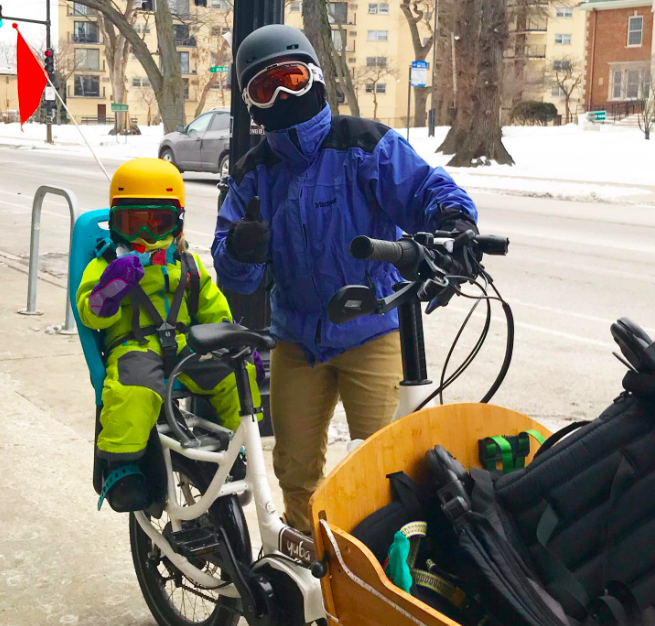
The battle to bring sanity to urban streets has gotten a boost from parents wishing to reduce their car dependence. When my kids were little, our family tandem was a rare sight at school drop-off time. Today, moms and dads pull up not just with one child on a tagalong, but two or three kids riding on the back of a long cargo bike, or in the bucket of a front-loader. Parents with kids in tow normalize using the bike for everyday errands, schlepping and just getting around.
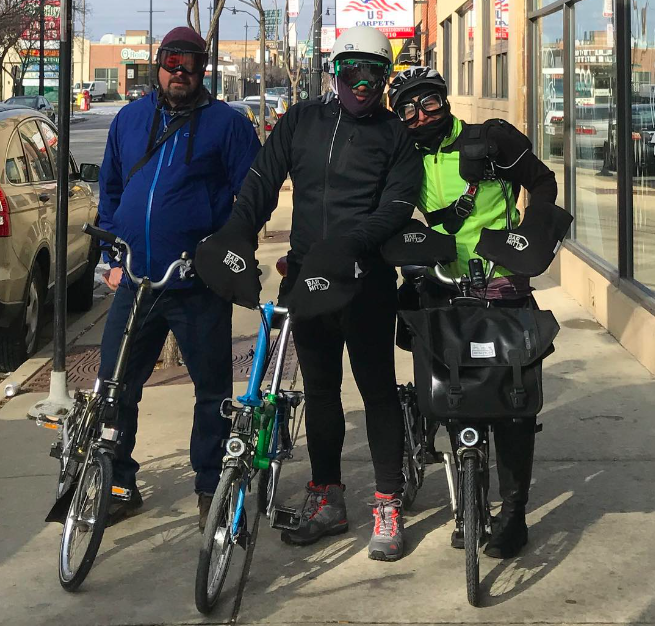
People wanting to take advantage of the conveniences of dense urban living, who use compact folding bikes that fit neatly into tight urban spaces: small apartments, office elevators, train cars, and the trunk of an Uber. These folks don’t want to build a life around the bike; they want a bike that fits into the life they live.
These groups are looking to various types of bikes to make their lives easier. They’re looking for mobility options with more comfort, more flexibility, more accommodation, and sometimes for a little boost.
And why NOT easy?
Probably the biggest reason that —as a society— we use cars with such unwavering devotion, is because they make our lives easy. How can we fight against the ease of cars is with something that requires more grit, more determination, more perseverance, and more hardship? Who and when decided that biking should be hard?
I believe that the alternative products that make cycling easier, and the groups of people who gravitate to them, have the potential to do what we have not quite managed to accomplish in the last three decades of cycling advocacy: to change the way we move around the city. As some of the more punishing aspects of cycling are removed, more people turn to cycling as being efficient, economical, fun, and finally DOABLE!
The truth is that few people are heroes, and we’re certainly not heroes every day. Most of us are wimps. Different things is our lives make us wimps: habits, children, distance, weather, aches and pains, fear, sometimes age, sometimes youth, winter colds, whims, moods, barometric pressure, stress. And frankly, while the heroic feats of others may sometimes inspire us, they probably won't motivate us on a daily basis. If the bar is set too high, we won't even make an attempt to reach it.
Chances are you will not entice someone new to cycling by painting visions of snot icicles, foggy goggles, blue fingertips and admonitions about the importance of layers. You will not smooth the way for them by debating the pros and cons of actually stopping at stop signs, or extolling the joys of your 40-mile daily commute. There may be folks who find this type of challenge appealing, but if the point is to create more cyclists, then this is not a winning strategy.
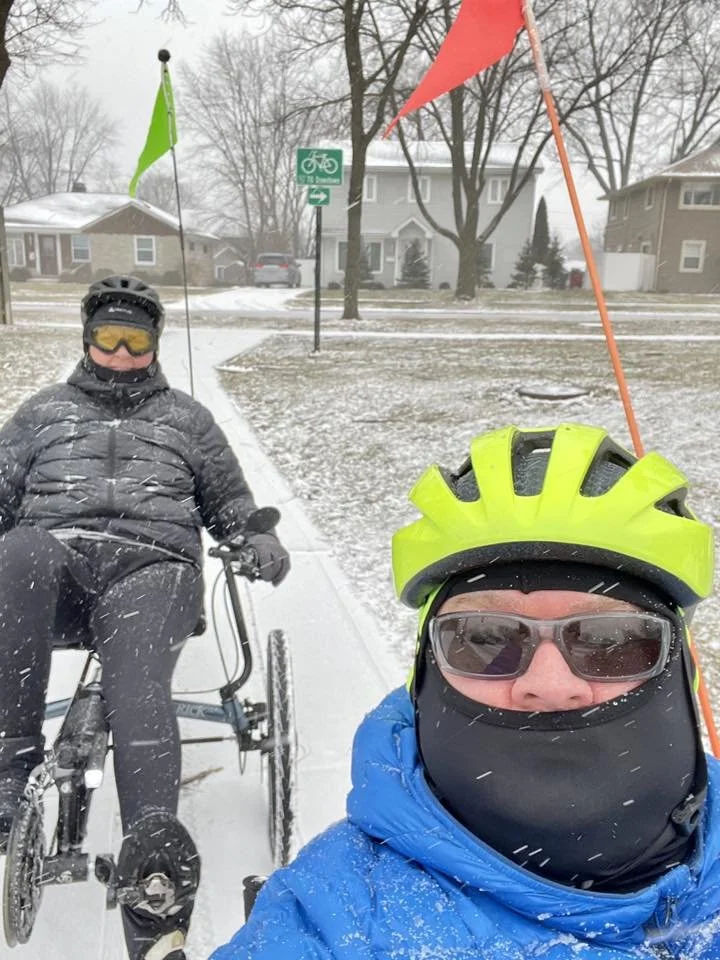
Instead, as we return to the view of the bicycle as a tool for mobility and expand on it, we recapture the original values of autonomy, flexibility and confidence. Then we add comfort, stability and convenience —not as indulgences, but as support and reinforcement for a better, more movement-centered life. Reducing the friction around biking makes riding more often —and more consistently— possible.
Words like “doable” and “viable” may not be as click-worthy as awe-inspiring feats. But —after you click through— then what? On the other hand, if what is doable and viable is also pleasurable, it creates lasting engagement. Engagement —how enjoyable, accessible, and freeing a ride feels— is what determines whether cycling becomes a phase, or a habit. And if that persistence arises from real engagement, it will keep you riding for years in a way that doesn’t feel like self-improvement, but like a lifestyle.
And you might actually venture out confidently on a day when icicles will form under your nose.