
Rethinking Mobility: Why Comfort Matters in Human Powered Transportation
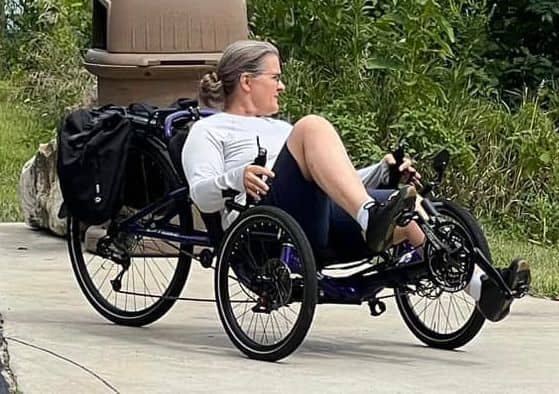
The two most commonly requested comfort modifications on a conventional bike are (1) a wider, cushier saddle and (2) higher handlebar position. Next up is the ease of getting on and off. No one wants to lose their balance while swinging their leg over the saddle.
Riders want comfort.
Yet, the vast majority of conventional bike manufacturers continue to design bikes with hard and narrow saddles, and a handlebar position that forces a disproportionate chunk of the rider’s weight onto their wrists when the seat is at the proper height. Plus, over the last several decades they’ve convinced us that a frame that digs into your crotch is manly. It’s as if they made it a point of honor to make the already questionable conventional bike ergodynamics as punishing to the general public as possible.
The fact that most discussions of cycling comfort center on our hind ends (and other unmentionables) does nothing to make those conversations any easier. Comfort has long been treated as the ugly stepchild in the cycling industry, and usually addressed with the most superficial of solutions.
Though comfort may not be the most glamorous of design considerations (think sweatpants), given the option, us mere mortals will choose it every time (think sweatpants, again 🙄). The minivan is probably the most famous example of this: while the majority of automotive enthusiasts were underwhelmed by the ungainly mix of the station wagon and the cargo van, the safety-and-comfort-first design was so world-changing to millions of American moms that it saved Chrysler from impending bankruptcy.
We’re done with comfort-optional cycling. Adults over 60 are rapidly becoming most numerous segment of the US population, and —unlike previous generations— they (um, …we) are not retreating from activity. We want to stay fit, healthy, mobile, and engaged with the world around us. We don’t want unnecessary aches, pains and strains standing between us and our desire to keep moving.
In that context, comfort becomes not a luxury, but a key issue in personal transportation, mobility and wellness. A mobility tool ceases to be effective when it causes neck or back pain, numb hands, balance anxiety, joint stress or pelvic concerns. Pain doesn’t just shorten rides—it ends good, life-prolonging habits before they start.
Continued mobility depends on repeatability, and repeatability depends on how our bodies feel during and after a ride. Designs that prioritize ergonomic support, stability, and reduced physical strain aren’t just “nice to have”; they extend autonomy and independence. For those who want to choose movement —year after year— comfort is not indulgence. It’s the difference between staying part of life, or slowly opting out.
The uncomfortable truth is that many transportation and cycling designs still assume a narrow window of age, flexibility, and tolerance for discomfort. When people begin to experience pain or instability, the problem is not seen as design failure, but the inevitable personal decline.
But if the goal is lifelong mobility, that framing makes no sense. Systems that only work for bodies in their physical prime aren’t sustainable. Comfort-forward design isn’t conceding defeat; it’s rejecting the idea that independence should expire on a schedule set by outdated assumptions.
Riders who intend to use their bikes day in and day out require comfort.
For riders who intend to use their bikes into their seventh or eighth decade (or beyond), it’s non-negotiable.
Neck pain, numb hands, balance, stress, saddle discomfort and back pain don’t just shorten rides. They put an end to cycling. When cycling moves beyond a quick spin around the park into everyday travel or health-preserving mobility, discomfort stops being a personal challenge and becomes a barrier to lifestyle change.
If bikes are ever to become a primary lifestyle, transportation and personal mobility choice, comfort needs to be a key design consideration.
Comfort Features of Recumbent Trikes
Seat shape allows for the distribution of the rider's weight over a much larger area than on a typical bike, making saddle pain a non-issue.
Seats offer back support along the entire spine, which eliminates back strain one experiences on a standard bike.
Natural siting position allows the rider to keep their neck and head upright. No need to crane and strain your neck as you view the road.
Hands and wrists are used only for steering, and do not support any portion of the body weight. This does away with wrist and hand pain or numbness.
Recumbent trikes minimize the risk of injury due to falling. You can stand still or travel at very low speeds on a trike without fear of it tipping over.
Because recumbents offer a much more comfortable, rider-friendly position, they increase the overall enjoyment of the ride, so you can stay relaxed and ride pain-free over much greater distances than on a conventional bike.
Recumbent curious?