
What is a recumbent?
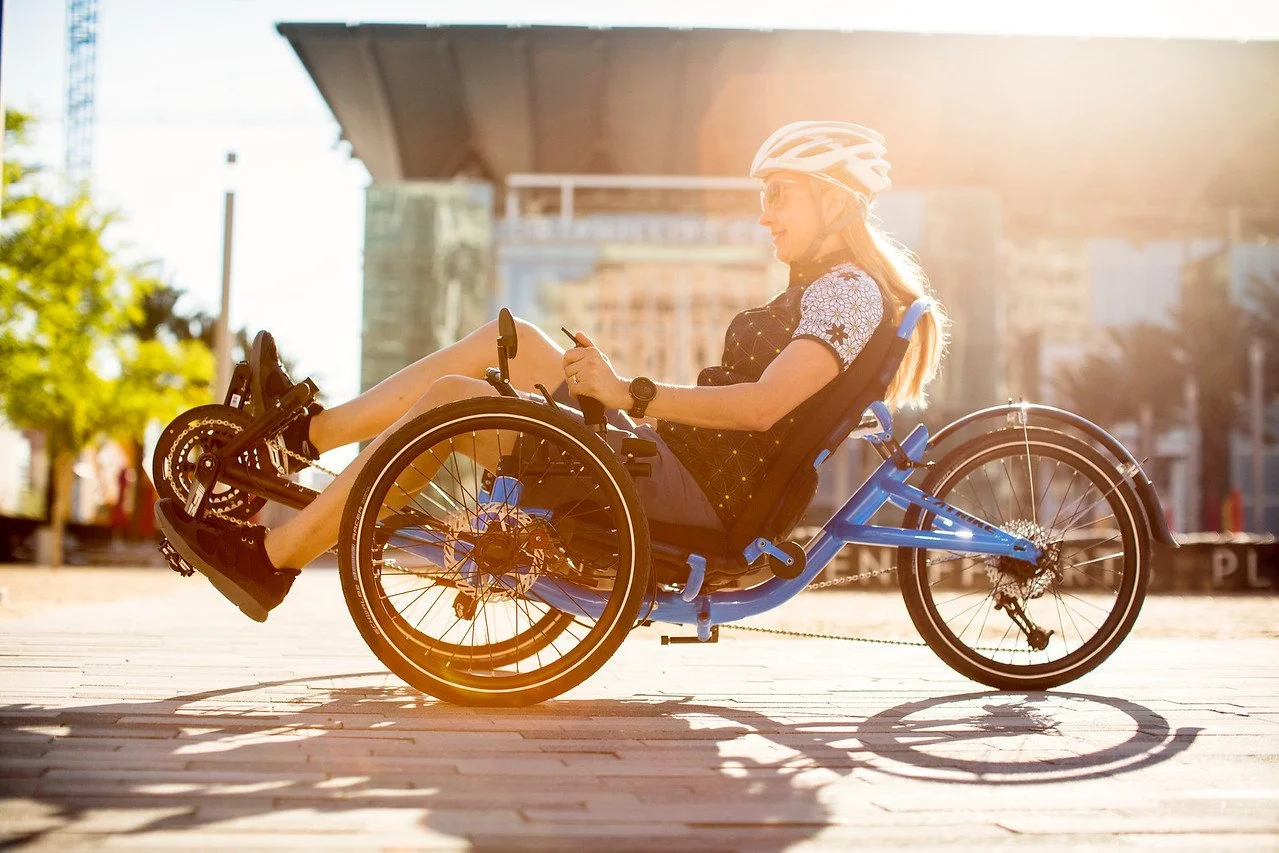
Looks weird. But comfortable. Right?
A recumbent is a two- or three-wheeled, pedal-powered vehicle designed around a simple but radical idea:
your body deserves support, not punishment, if you’re going to keep traveling independently for years to come.
Instead of perching on a narrow saddle, the rider sits in a reclined or semi-reclined position, pedaling with their feet in front of them. The body is supported from the hips along the entire spine, while the head and neck remain in a natural, upright position—much like sitting in a comfortable chair or driving a car.
This isn’t a gimmick. It’s a different philosophy of mobility.
Recumbents offer a riding position that is fundamentally superior in comfort and ergonomics to a conventional bike—and that comfort is what turns cycling from an occasional activity into a reliable, everyday freedom machine.
The Recumbent Seat: Designed for Distance, Not Suffering
The seat on a recumbent feels familiar the moment you sit down. It’s closer to a lounge chair than a bicycle saddle, with a full back that supports the rider’s buttocks, lower back, and mid-back. Many models offer an optional headrest, providing additional support for the neck and base of the head.
Because your weight is distributed over a large surface area, pressure points disappear. No sore hands. No aching neck. No numbness where no one wants numbness.
Seat height varies by design and purpose. Many leisure and touring trikes place the seat 11–17 inches off the ground, offering a stable, confidence-inspiring ride. Performance-oriented trikes and low riders may sit lower, while two-wheel recumbents and many tadpole trikes have seat heights similar to a standard chair.
Some high-performance recumbents use narrow, rigid, contoured seats with foam padding, optimized for speed. Comfort-focused recumbents prioritize long-term ease and everyday usability—the kind that keeps you traveling under your own power well into the future.
Cranks & Pedals: Efficiency Without Fatigue
On a recumbent, the cranks and pedals extend forward from the seat. Combined with full-body support, this creates a pedaling position that is both efficient and remarkably non-fatiguing.
Because your torso is supported, your head and neck stay upright naturally. You see the road, the scenery, and the world around you without craning your neck or hunching your shoulders. That matters when cycling isn’t just exercise—but transportation, exploration, and independence.
Seat height influences how easy it is to get on and off the bike, but once seated, the relationship between the seat and crank position defines the ride feel. Casual and recreational recumbents tend to place the cranks lower relative to the seat, prioritizing ease and approachability. Performance-oriented models raise the cranks for greater power transfer.
Different designs for different riders—but all aimed at the same goal: sustainable, human-powered travel.
Steering: Relaxed Control, Not Braced Tension
Recumbent steering is designed to eliminate strain on the wrists, arms, and shoulders.
Most trikes use side-mounted steering handles positioned alongside the rider’s hips, allowing the arms to rest naturally by your sides. Some two-wheel recumbents use this configuration as well.
Other models—especially two-wheelers—feature upright steering, with the bars rising toward the rider’s chest. This, too, is comfortable and neutral, placing no pressure on the wrists or forearms.
Either way, the result is the same: control without tension, confidence without strain.
A Familiar Position for an Unfamiliar Idea
Recumbents may look unconventional, but the riding position itself is deeply familiar. We recognize it instantly from lounging in a chair or sitting behind the wheel of a car.
What surprises most people is not how strange it feels—but how normal it feels.
And how quickly they realize they can ride farther, longer, and more comfortably than they ever expected.
This is what a Freedom Machine looks like when it’s designed around real human bodies and real lives.
Curious?